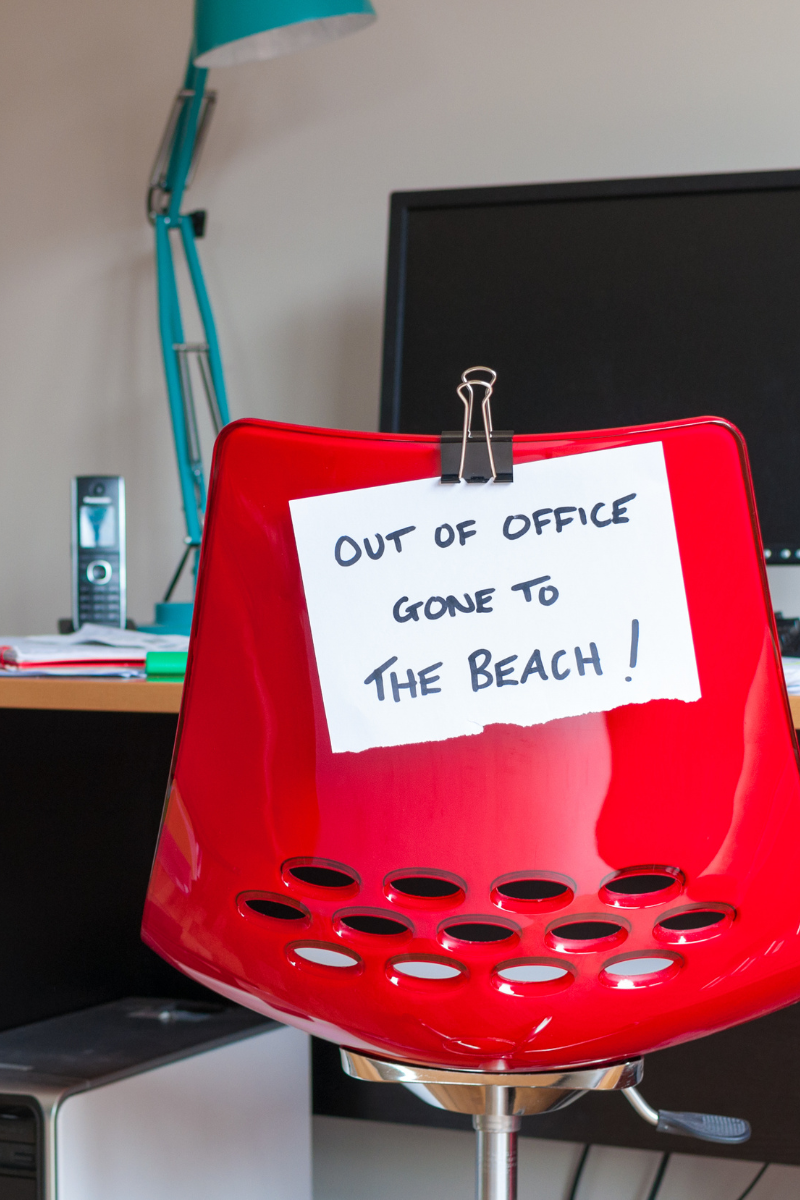
We’ve all been there, a few days before vacation, something strange tends to happen.
You finally see a break on the horizon, probably something you’ve needed for a while. But instead of feeling relieved, your mind starts racing. You notice what’s unfinished. Emails suddenly seem more urgent. Even the smallest tasks feel like they can’t wait.
You tell yourself you just need to get through a few more things. Then you’ll relax. But even when you do step away, your mind doesn’t always follow.
Maybe you’re sitting on a plane, stretching out on a sun-warmed beach towel, or laughing at dinner with friends, but part of you is still at your desk. You’re running through details, replaying conversations, wondering what’s happening while you’re away.
Sound familiar? If you’re someone who’s reliable, organized, and used to holding a lot together, this is probably more than just a passing feeling.
The Part of You That Doesn’t Shut Off
In fact, the people who find it hardest to disconnect are usually the ones others rely on most.
You’re the one who notices what’s missing before anyone else does. You keep things moving. You catch problems early. You care deeply about doing your job well.
None of that just turns off because you set an out-of-office reply.
Your mind’s been trained to stay a step ahead. It’s been practicing that for years. So when you try to step away, it keeps doing what it knows best: scanning, planning, anticipating.
That’s not a flaw, it’s a pattern that’s kept you (and others) afloat for a long time.
But sometimes, it doesn’t know when it’s safe to rest.
The Pressure to “Finish Everything”
Right before time off, there’s often an unspoken rule running in the background:
I need to wrap everything up before I go.
It sounds reasonable, but it rarely matches how work really functions. Things keep moving. New emails come in. Projects shift. There’s always something else that could be done.
Trying to reach a point of total completion can leave you more anxious, not less.
What usually helps more is a different approach. It’s less about finishing everything and more about containing what’s left.
Writing things down. Leaving clear notes. Letting someone know where things stand.
Once it’s out of your head and somewhere reliable, your mind doesn’t have to keep circling back to it.
Why Your Body Feels Wired
There’s a physical side to this, too—one we often overlook.
If your days involve constant decisions, problem-solving, and staying alert, your body gets used to that pace. It becomes normal to feel “on.”
So when you finally stop, there’s often a lag.
You might have nothing urgent to do, but your system hasn’t caught up yet. You feel restless, a little on edge, like you should be doing something even when you don’t need to be.
That’s part of the adjustment, not a sign you’re doing rest wrong.
For many of us, it takes a couple of days before things actually start to slow down.

What Helps
Most people don’t need a big system to change this. What you’re missing might just be a clear stopping point. Something simple, but intentional.
Write down what needs your attention tomorrow.
Close your laptop and actually pause before moving on.
Step outside for a few minutes before you jump straight into the next thing.
It matters less which ritual you choose and more what it signals: this part of the day is done.
Without that, your mind keeps the tab open.
The same idea works before vacation, too.
You don’t need everything finished. You just need to know where things stand and trust that it’s enough for now.
Let someone know what’s pending. Set a clear out-of-office message. Decide what can wait.
Most of the pressure we feel comes from trying to hold it all in our heads at once.
The Shift That Makes the Difference
For people who care about their work, the goal isn’t to care less.
It’s to be able to step in and step out.
It means being fully engaged when you’re working and just as present when you’re not. That takes practice. It doesn’t happen just because you tell yourself to relax.
It happens when your mind starts to learn, over time, that things don’t fall apart when you’re not actively managing them. That you can leave, come back, and pick things up again.
A Different Way to Think About Time Off
It’s easy to treat rest as something you earn only after everything is done. But for most people, that moment never really comes. Work expands. Responsibilities shift. There’s always more that could be handled. So the shift isn’t about finishing everything. It’s about deciding that, for now, what you’ve done is enough. And letting that be the place you step away from. Because time off isn’t separate from how you function at work. It’s part of what allows you to keep showing up the way you do.
References
Baktash, M. B., & Pütz, L. (2025). Psychological detachment from work and employee well-being. Journal of Happiness Studies.
Sonnentag, S., & Kruel, U. (2006). Psychological detachment from work during off-job time: The role of job stressors, job involvement, and recovery-related self-efficacy. European Journal of Work and Organizational Psychology.
Tement, S., et al. (2020). Improving psychological detachment from work through cognitive-behavioral and mindfulness interventions. BMC Public Health.